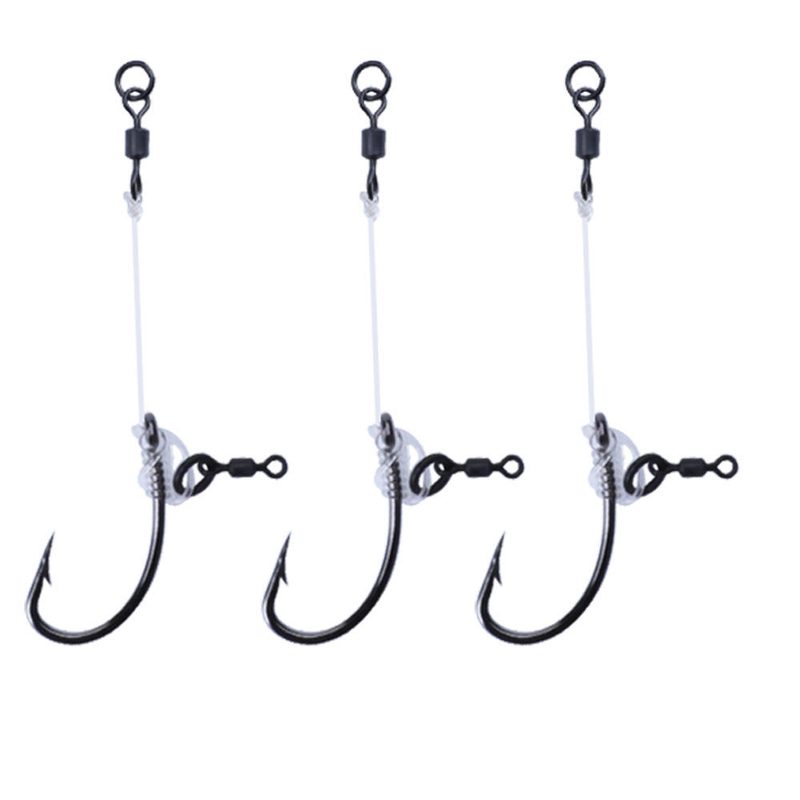
| Hook sizes offered | 2 / 4 / 6 / 8 hook size |
|---|---|
| Rig style | hair rig style |
| Rig sliders | included rig |
| Rigged as | boilie-ready rigged |
| Pack form | bag pack |
Definition
A hair rig presents the bait on a short strand of line behind the hook, so a carp sucking in the loose bait takes the bare hook with it — the presentation every modern carp and feeder bite is built around.
Tying hair rigs well is a skill and tying fifty of them is a chore; the FF-T6 arrives tied and rigged at the factory in four hook sizes, so the bank side is spent choosing rigs, not making them.
Bait behind the hook, not on it
A bait threaded on the point must be pushed on and reseated every recast, and carp learn to mouth it; a boilie floating on its hair leaves the hook shank bare, so the fish that inhales the bait gets the hook in the same mouthful. That single difference is why the hair rig displaced every older presentation for targeted carp work.
A size ladder that fits the day
Small hooks serve a day when carp are sipping a single pellet or maggot, bigger shanks carry a hard 14–16 mm boilie through a season of casts; carrying 2 through 8 means the terminal tackle answers the bite instead of the bite adapting to what is in the box. The matching sliders let a loose feed or a wafter pop up off the bottom on the same rig.
Which hook size should a wholesale order start with?
The size mix is confirmed against the factory spec sheet before the order — but a sensible feeder starting set leans on the middle of the ladder, because most matched hooklengths end up there; small and large sizes answer the extremes of a fishing day, not its default.
Are boilies supplied rigged on every rig?
The listed configuration ships rigged on boilies bait; whether the wholesale carton repeats the rigged sample exactly — bait type, flavour, quantity per bag — is a line to verify with the factory before ordering, and the same check covers hooklength strand and breaking strain.